38,25 €
Orders paid before 1430 are typically shipped the same day.

No products
Quantity:
Total:
Total products: (tax incl.)
Total shipping: (tax incl.) To be determined
Tax: 0,00 €
Total: (tax incl.)

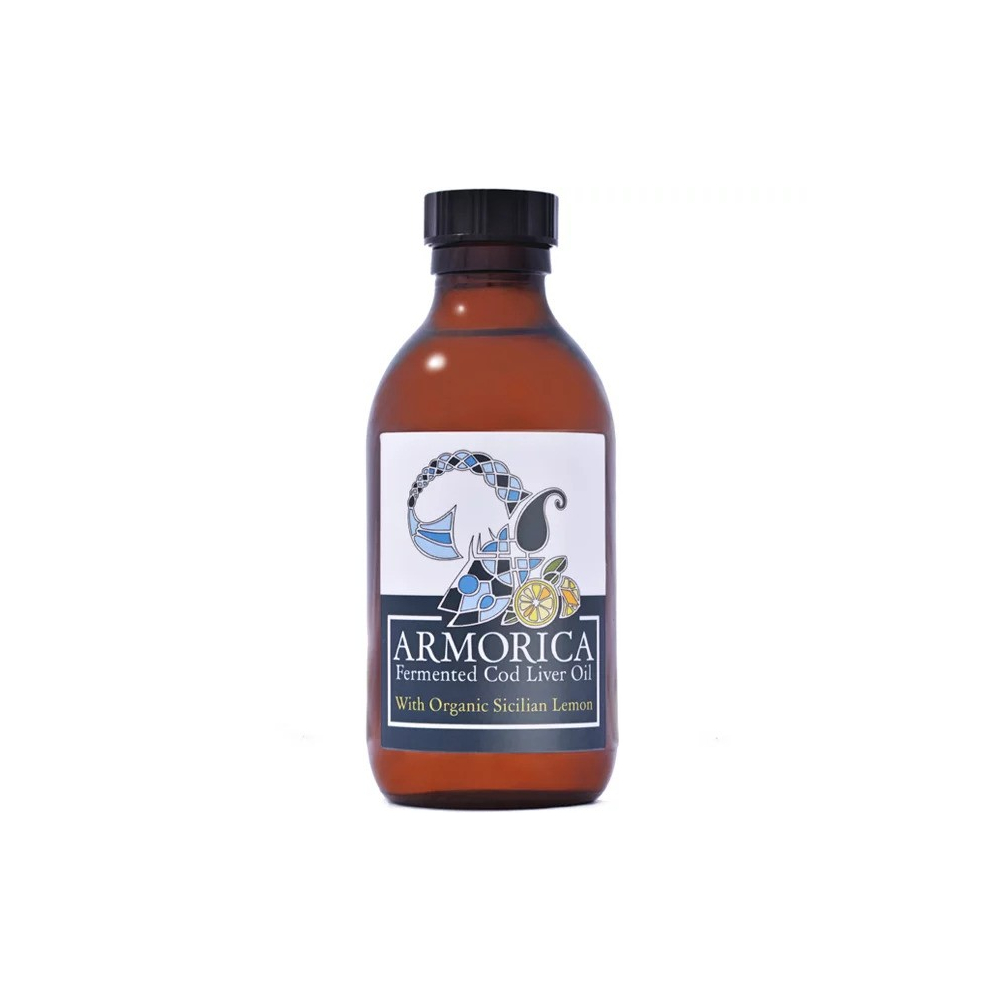
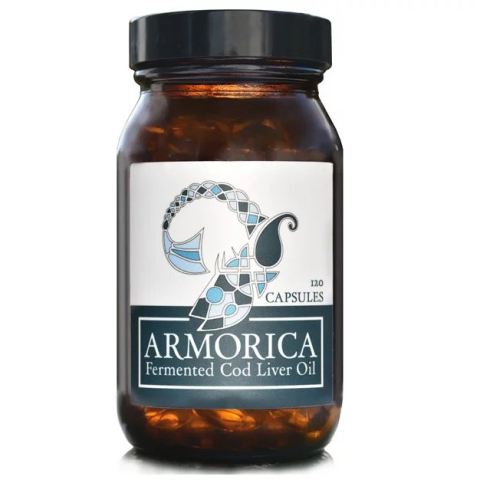
Armorica Fermented Cod Liver Oil is made in Europe from Atlantic Cod (Gadus Morhua) caught in the North Atlantic.
Warning: Last items in stock!
Availability date:
By buying this product you can collect up to 45 loyalty points. Your cart will total 45 points that can be converted into a voucher of 1,35 €.

| Quantity | Discount | You Save |
|---|---|---|
| 3 | 5% | Up to 0,00 € |
| 6 | 10% | Up to 0,00 € |
| SKU | |
| Manufacturer | Armorica |
| country | United Kingdom |
Armorica Fermented Cod Liver Oil is made in Wales through the carefully controlled cold lacto-fermentation of cod livers, exclusively sourced from Atlantic Cod (Gadus Morhua) caught in the pristine waters of the North Atlantic. Extracting cod liver oil through fermentation avoids the need for any heat treatment or chemicals, and preserves all the naturally occurring nutrients.
Due to Armorica's unique low-temperature fermentation process, all the naturally occurring nutrients in the oil remain intact. Armorica neither heats, chemically treats, nor adds synthetic vitamins to fortify the oil. Everything is completely natural.
For thousands of years, cod liver oil was produced in Northern European countries through fermentation. It was widely recognised for its exceptional health benefits. Production of cod liver oil changed dramatically in the 1900s with the introduction of mass-production machinery. There was a desire to produce a product quickly, cheaply and in great volume. This was done at the expense of the quality, and many nutrients were removed or damaged.
Armorica has reproduced the traditional conditions for cod liver oil extraction, with only a few minor modern improvements, such as fermentation in a completely oxygen-free environment, which prevents any oxidation of omega-3 fatty acids. The resulting oil combines the best of the modern and the traditional.
Armorica Fermented Cod Liver Oil is flavoured with Organic Lemon oil pressed from Sicilian lemons. This natural flavour really does taste great, helps to mask fishy flavours and also helps to combat repeating fishy flavours.
Per teaspoon
| Energy | 170 kJ / 41kCal |
| Vitamin D3 | 9.2 μg (368 IU) |
| Vitamin A | 828 µug (276O IU) |
| Total omega-3 fatty acids | 1100 mg |
| EPA | 367 mg |
| DHA | 492 mg |
By "like" we don't mean "OMG, this is so tasty, I can't stop"! We mean we like the health benefits and the nutritional content. So many foods are a lot nutrient poorer today than they were 30 or 100 years ago. Our soil is depleted, animals and plants are "made" to grow quicker. Fermented cod liver oil packs a nutritional punch and is therefore an excellent choice if you are looking to enrich your diet. We also like that it's made in Europe.
Sizilianische Zitrone!
Hatte vorher Omega Total von Norsan, das mir bereits gut schmeckte. Beim Amorica ist der Zitronengeschmack noch aromatischer. Man schmeckt förmlich die Sizilianischen Zitronen. Und - da es ausschließlich fermentiertes Dorschleberöl enthält (ohne Olivenölzusatz) ist die Nährstoffdichte noch höher. Bin begeistert!
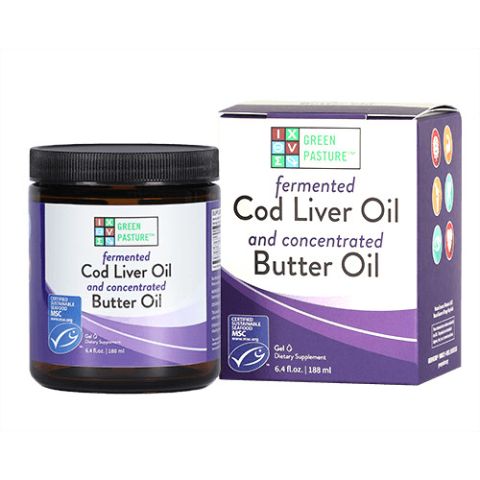
Super Alternative zum Green Pasture
Der schmeckt wie ein Zitronenkuchen, sagen unsere Kinder zu diesem Lebertran.😁
Das Zitronenöl schmeckt man ganz gut raus. Der Lebertran selbst ist fermentiert, also schmeckt der etwas schärfer als der aus der Apotheke. Jedoch fanden wir, dass dieser nicht ganz so scharf ist wie von Green Pasture, aber vielleicht ist es auch chargenabhängig.
Ebenfalls positiv finde ich, dass dieser Lebertran in Europa hergestellt wird.
Gerne werden wir diesen wieder kaufen und empfehlen ihn auch gerne weiter.
38,25 €
42,50 €
49,95 €
3,06 €
34,00 €